
🦠 Understanding the Gut Microbiome: The Key to Better Health
🌱 What is the Gut Microbiome?
The gut microbiome refers to trillions of microorganisms—mainly bacteria, fungi, and viruses—that live in your digestive tract, especially the intestines. These microbes aren’t just passive passengers; they play a crucial role in digestion, immunity, and even mental health.
🔬 Why the Gut Microbiome Matters
1. Digestive Health
A balanced microbiome helps break down complex carbs, fiber, and proteins. Imbalances can lead to issues like bloating, constipation, or IBS.
2. Immunity Booster
Around 70% of your immune system is located in your gut. Good bacteria help prevent infections and reduce inflammation.
3. Mood and Mental Health
The gut-brain axis links your digestive system with your brain. Serotonin—a mood-regulating hormone—is mostly produced in the gut, not the brain.
4. Weight Management
Research shows that your gut bacteria can influence how you store fat, regulate glucose, and feel hungry.
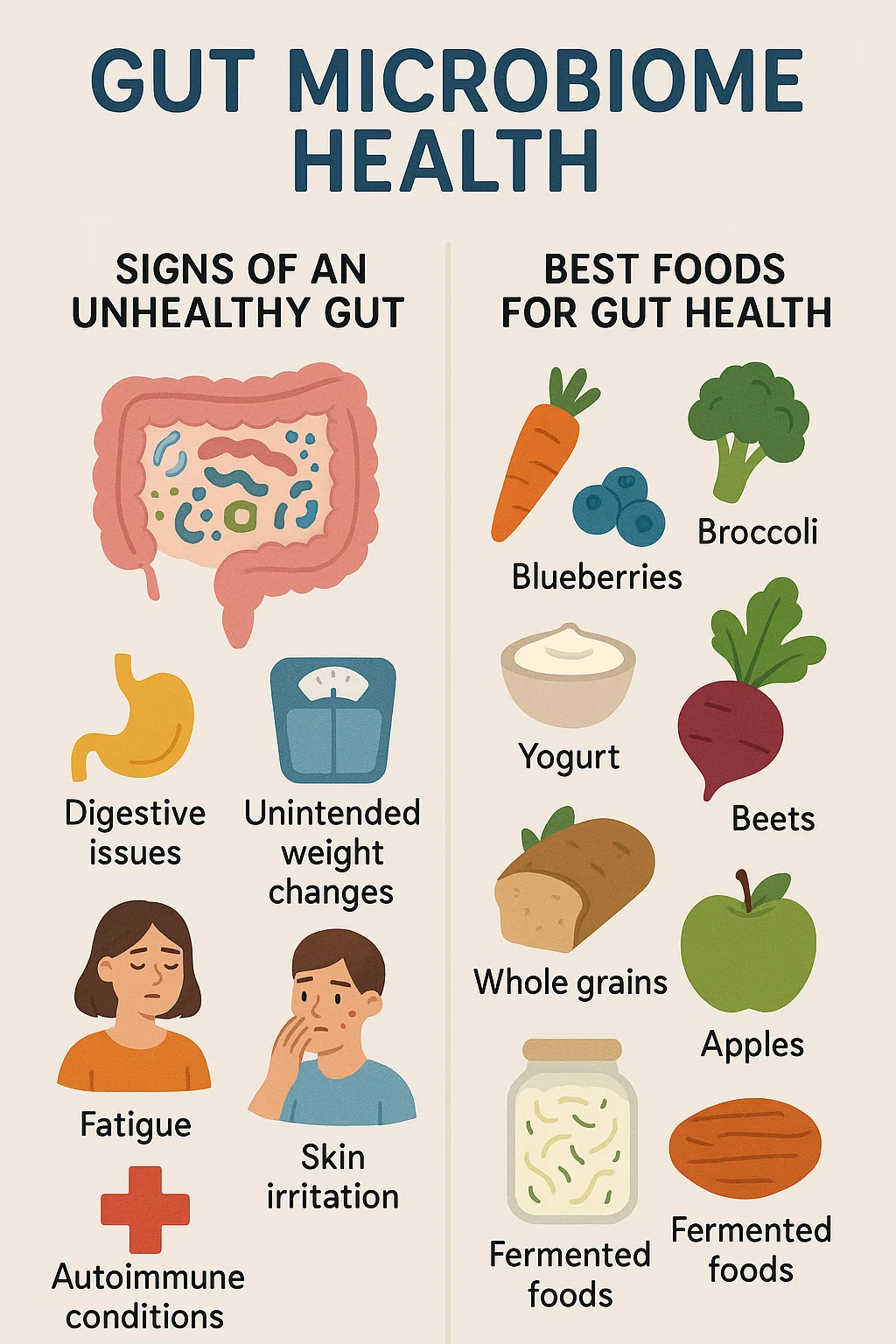
🍎 Signs of an Unhealthy Gut
-
Frequent bloating or gas
-
Constipation or diarrhea
-
Sugar cravings
-
Fatigue and brain fog
-
Skin issues like acne or eczema
-
Mood swings or anxiety
🌿 How to Support a Healthy Gut Microbiome
1. Eat More Prebiotics
These are fibers that feed good bacteria. Found in:
-
Garlic
-
Onions
-
Bananas
-
Oats
-
Apples
2. Add Probiotics to Your Diet
These are live bacteria found in:
-
Yogurt
-
Kefir
-
Kimchi
-
Sauerkraut
-
Miso
-
Tempeh
3. Avoid Overuse of Antibiotics
Only take antibiotics when necessary, as they kill both good and bad bacteria.
4. Cut Back on Sugar & Processed Foods
These feed harmful bacteria and disrupt the balance of your microbiome.
5. Stay Hydrated
Water promotes the health of the intestinal lining and helps keep things moving.
6. Exercise Regularly
Physical activity increases microbial diversity.
7. Sleep Well
Lack of sleep can disrupt gut balance and increase inflammation.
🧪 Should You Take a Gut Microbiome Test?
Home testing kits can analyze your stool to check your gut bacteria levels. This might help personalize your diet and improve digestion, mood, and immunity.
📌 Final Thoughts: Your Gut, Your Health
A healthy gut microbiome is not just a digestion issue—it’s a whole-body wellness foundation. By eating the right foods, managing stress, and making lifestyle changes, you can build a healthier gut and a healthier you.
⚠️ Signs of an Unhealthy Gut
If your gut microbiome is out of balance, your body will send warning signals. Common symptoms include:
1. Digestive Issues
-
Bloating, gas, diarrhea, constipation, or heartburn
2. Frequent Sugar Cravings
-
An overgrowth of bad bacteria often fuels sugar cravings
3. Fatigue & Brain Fog
-
A disrupted gut can affect energy levels and mental clarity
4. Unexplained Weight Changes
-
Poor absorption of nutrients or bacterial imbalance may affect metabolism
5. Skin Conditions
-
Acne, eczema, or rosacea can be linked to gut inflammation
6. Food Intolerances
-
An unhealthy gut may struggle to break down certain foods properly
7. Weakened Immunity
-
Frequent infections or slow healing could indicate poor gut health
8. Mood Disorders
-
Anxiety, depression, and mood swings may stem from gut-brain axis dysfunction
🥦 Best Foods for Gut Health
A diet rich in fiber, fermented foods, and polyphenols promotes a diverse and balanced gut microbiome.
✅ Prebiotic-Rich Foods (Feed Good Bacteria)
-
Garlic
-
Onions
-
Leeks
-
Asparagus
-
Bananas
-
Apples
-
Oats
-
Flaxseeds
✅ Probiotic Foods (Contain Live Good Bacteria)
-
Yogurt with live cultures
-
Kefir
-
Kimchi
-
Sauerkraut
-
Miso
-
Tempeh
-
Pickles (naturally fermented)
✅ Fiber-Rich Vegetables & Legumes
-
Broccoli
-
Spinach
-
Carrots
-
Lentils
-
Chickpeas
✅ Polyphenol-Rich Foods (Fight Bad Bacteria)
-
Green tea
-
Berries
-
Dark chocolate
-
Red grapes
-
Olive oil
✅ Bone Broth
-
Supports the intestinal lining and reduces inflammation
✅ Water
-
Essential for digestion and maintaining a healthy mucosal lining